


Prakash Mugali travels from Belgaum to Mumbai twice a month. He is not there for start-up meetings. He goes to train in Jeet Kune Do, a hybrid martial art form pioneered by Bruce Lee.
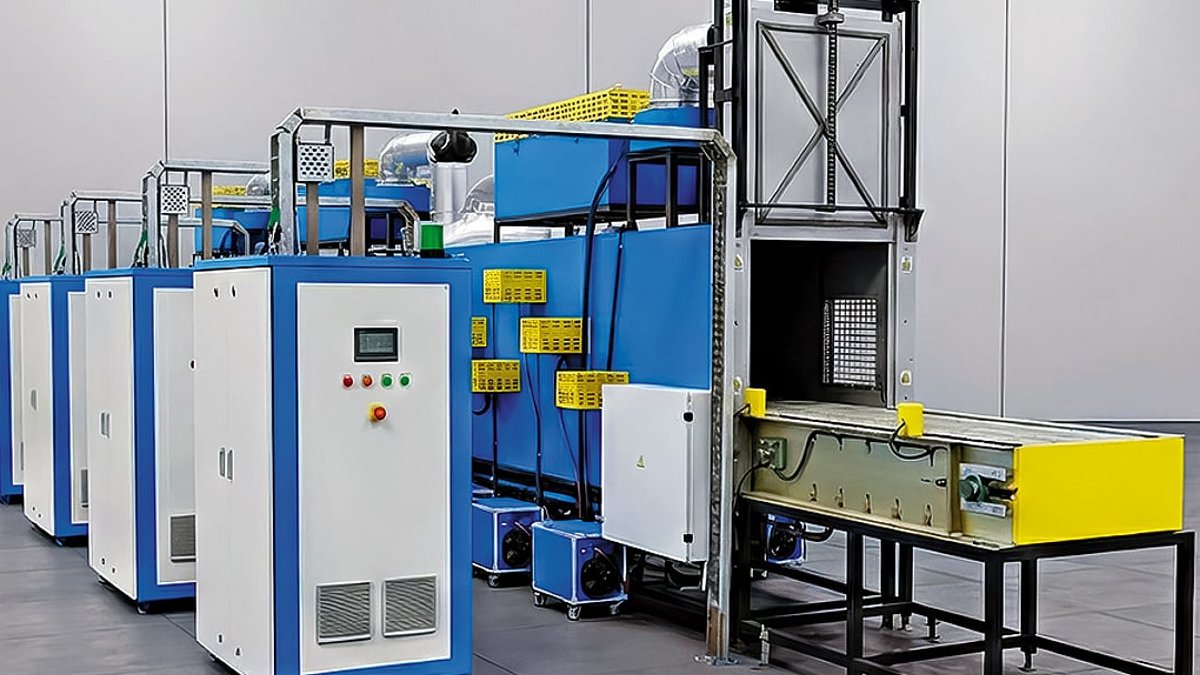
The patience of a stance, the precision of a strike, and the understanding that you cannot out-negotiate a proper joint lock—all of it translates well to running a deep-tech company. Mugali is the founder and chief strategy officer of Enerzi, a company that manufactures industrial machines using microwaves, not traditional heat, to process materials like rubber, ceramics, and food, with less energy consumption.
From Small Town to Start-Up
Mugali grew up in a small town near Belgaum and studied electronics and communications engineering at KLE Society’s College of Engineering and Technology in Belgaum. Instead of taking a safe IT job after graduation, he joined a manufacturing company in Bengaluru in 2002, switching jobs twice within 18 months to gain exposure to different domains.
By December 2003, Mugali started a manufacturing unit making measuring devices. In 2005, he met MS Krupashankara, who had returned from the US and was looking for a team in India to build industrial microwave components. Under Krupashankara’s guidance, Mugali and his team spent 2005–07 learning to manufacture basic microwave products, alongside their original instrumentation business.
Pivoting to Microwave Technology
By 2007, Mugali pivoted Enerzi’s focus to microwave technology, transforming lab capabilities into industrial solutions. The company developed turnkey microwave systems for rubber processing, ceramic sintering, food disinfestation, and laboratory sintering furnaces.
These systems consume 30-40% less energy than conventional methods. Enerzi’s clients include defense labs and research institutions. The company has been headquartered in Belgaum, a Tier-II Karnataka town, for two decades.
Read Also: India’s Rocket Start-Ups Surge in Private Space Race
A New Leadership and a New Focus
Kirankumar Hittalmani, Enerzi’s current chief executive, has known Mugali since 2004, when he joined the company as a junior engineer. After a year, he left for the automotive sector but stayed in touch. Hittalmani returned to help reinvent Enerzi’s products and focus, first around 2015 and again in 2020 during the pandemic.
Enerzi aims to provide economical, energy-efficient, and eco-friendly solutions for sustainable energy. Being based in Belgaum offers low employee attrition and a lower cost of living but poses challenges like limited air connectivity and difficulty hiring top-tier talent.
Mugali is focused on clean hydrogen, particularly microwave plasma technology, which splits methane into clean hydrogen and solid carbon without direct CO2 emissions. This method uses less energy than electrolysis, and the solid carbon byproduct has industrial applications. Mugali emphasizes the potential for this technology to make clean hydrogen more economical and scalable.
Funding and Future Plans
Enerzi operated on bootstrapped capital of about ₹3 crore for 17 years. This changed with a recent funding round that raised ₹17 crore in venture capital. The funding will support building a commercial plant roughly 10 times the size of the current pilot facility.
For Mugali, his martial arts training is not a footnote. It has honed his resilience and taught him to get back up after setbacks.


