


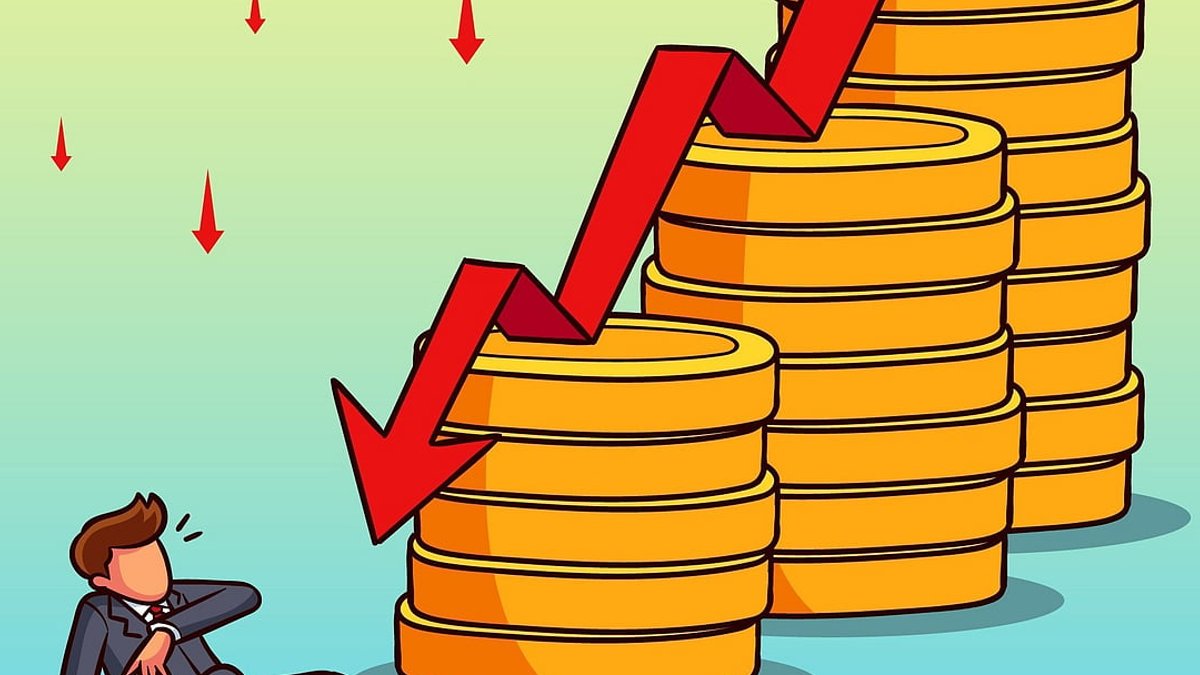
Gold prices have fallen by more than 9% this week, marking their steepest drop in eight months. The decline stems from concerns over Federal Reserve rate hikes, rising US bond yields, and a stronger dollar, which have prompted widespread speculative selling. On Friday, gold futures for December delivery on India’s Multi Commodity Exchange dropped 3.5% to ₹1,23,042 per 10 grams, hitting their lowest level since August 2023. Globally, spot gold prices slipped over 3% to $3,568.61 per ounce, down more than 35% from their record high.
This correction follows gold’s peak at $5,589.38 per ounce on January 28, driven by central bank demand and a weak dollar. Since then, profit-taking and shifting investor priorities have reversed the trend. The war in West Asia has pushed crude oil prices up 35% since February, forcing central banks to prioritize inflation control. Higher US bond yields, now above 5%, have reduced gold’s appeal as it offers no fixed returns.
Ajay Kedia, founder of Kedia Advisory, attributes the drop to speculative flows rather than fundamental weakness. “The fundamentals of gold are still intact and it is in oversold territory, which adds to the possibility of a dead-cat bounce in the short term,” said Kedia. However, near-term prospects remain weak. The US dollar’s recent gains—up 0.3% over five days and nearing a 52-week high—have made gold more expensive for foreign buyers, further reducing demand.
Speculative selling outpaces real demand
Analysts at Julius Baer emphasize that trading activity, not underlying demand, is driving the market. Carsten Menke, head of next-generation research, noted that speculative traders are reducing positions ahead of potential Federal Reserve rate hikes. A 50-basis-point increase, as hinted by Fed Governor Christopher Waller, could deepen the sell-off. Meanwhile, India’s Reserve Bank is expected to raise rates by 25 basis points in December, adding downward pressure on precious metals.
High crude oil prices are the primary catalyst. While Brent futures have corrected recently, they remain 35% higher than in February, compelling central banks to focus on inflation. This shift has led investors to favor bonds and other higher-yielding assets over gold. Even Anthropic’s $81 billion IPO, which absorbed market liquidity, contributed to selling pressure, according to Kedia.
Technical support and central bank bets
Technical indicators show mixed signals. Kedia expects support near $3,450 per ounce, while a rally toward $3,970 could emerge if market sentiment improves. DSP Mutual Fund is increasing its exposure to gold and silver, arguing both metals trade at steep discounts, 15% for gold and 28% for silver, against their fair values.
The near-term outlook hinges on the Federal Reserve’s next policy move. If bond yields stabilize and oil prices ease, gold could stabilize. However, with the dollar near multi-year highs and interest rates still restrictive, the path upward remains constrained.
Before the West Asia conflict disrupted markets, central banks had been accumulating gold amid de-dollarization efforts and a weak dollar. The target weight of gold in the Bloomberg Commodity Index for 2027 is set to edge higher to 14.93% from 14.90% this year, which will also add to inflows in the coming year, Kedia noted.
Lower crude oil prices, following the US Congress sweep by the Democratic Party, could alleviate inflationary pressure, allowing the Federal Reserve to ease its stance. “Inflationary pressure in the US should soften on the back of easing energy prices, allowing the Federal Reserve to be less aggressive than currently expected,” said Menke. A shift in expectations toward fewer rate hikes could weigh on the dollar and lure investors back into metals, with gold and silver prices potentially recovering next year. However, Menke warned investors not to “catch a falling knife.” Julius Baer remains ‘Neutral’ on silver and ‘Constructive’ on gold.


