


For freshman Miao Xuan, a 706-km bike ride marked the beginning of a new chapter in his life, as he traveled from east China’s Fujian Province to Nanjing, Jiangsu Province, where he was set to begin his university studies.
Miao, an outdoor sports enthusiast, made the trip with his father, a cycling aficionado, averaging about 70 km a day and spending 10 days crossing three provinces.
“The trip was tiring, but cycling felt great,” Miao said, adding that he plans to ride his bike to explore new cities whenever he gets the chance.
Cycling, he noted, not only keeps him physically fit but also refreshes his mind and helps improve his focus and perseverance.
Cycling Gains Popularity
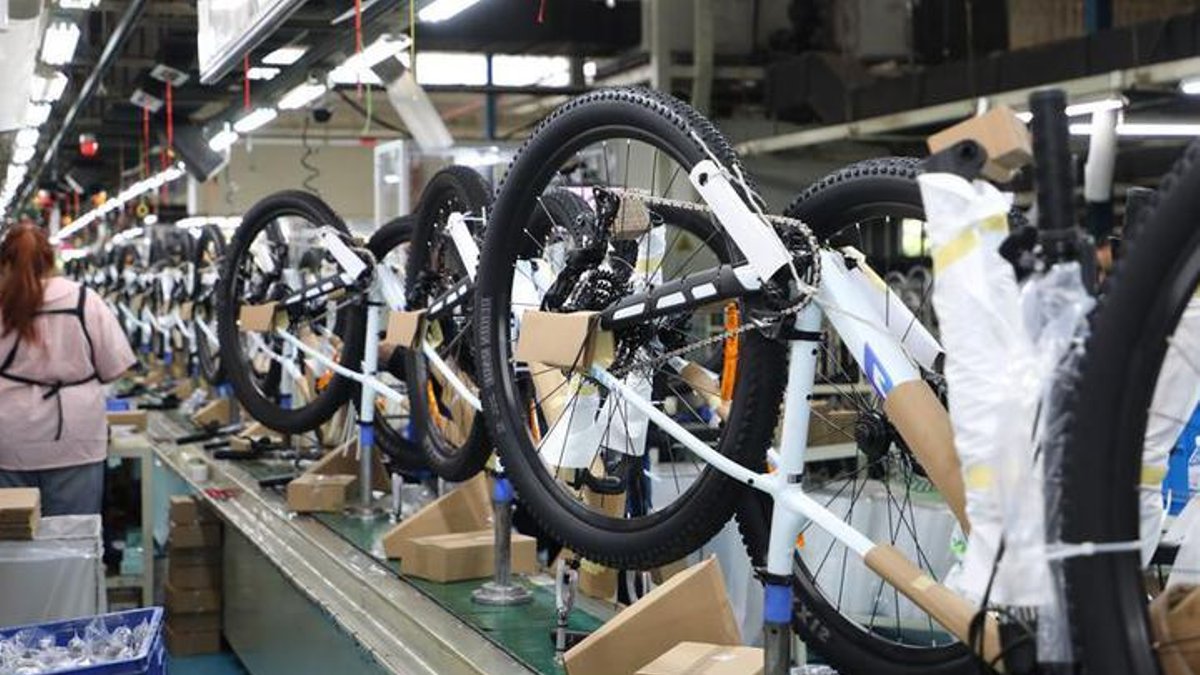
Today is World Cycling Day, and despite China’s status as the world’s top automobile market, it remains the globe’s biggest bicycle manufacturer.
Bike use has surged among young adults, who increasingly view cycling as both enjoyable and a way to stay fit, even as electric vehicles and public transit grow more common.
Read Also: Trump to Host Xi, Tariffs Dominate Talks
Li Bin, a cycling devotee from Wuxi in Jiangsu, now makes lakefront rides a habit, always wearing protective gear like goggles and a helmet for safety.
Li admitted he took up cycling primarily to shed weight, but the results led him to fall in love with the sport, which he’s practiced for roughly two years now.
Though shared bikes dominate Chinese cities, many young riders are now opting to purchase their own, viewing it as a commitment to a healthier way of life.
Growing Demand and Industry Growth
A recent industry report found China had over 130 million cyclists by last August, while the country’s bike industry generated 300 billion yuan in output.
On Xiaohongshu, a Chinese lifestyle-sharing platform, cycling-related content has generated billions of views, indicating a strong interest in the sport.
At a Nanjing bike shop, shelves display models with varying styles and features, as customers now prioritize frame quality and design over looks, according to manager Zhang Lan.
The store’s top sellers are road and mountain bikes costing between 2,000 and 5,000 yuan, and it’s already earned over 600,000 yuan in revenue since opening under six months ago.
Read Also: Macao fireworks contest returns with drone displays
Giant, a globally recognized premium bike brand, operates more than 3,000 stores in China and has introduced a women-specific line, customizing frames to fit female body types and preferences.
The range of cycling-related purchases is expanding beyond bicycles themselves to helmets, lights, cycling apparel, goggles, action cameras, and other accessories, creating increasingly specialized market segments.
According to an industry forecast, the cycling equipment market in China is expected to reach 32.29 billion yuan in 2026, up 12.6 percent year-on-year, with the overall cycling market projected to surpass 60 billion yuan.
Infrastructure Fuels Growth
As the cycling industry continues to grow, it is being fueled not only by consumer demand but also by an expanding network of cycling infrastructure, with cities across the country creating more cycling-friendly environments.
In Shanghai, a 45-km cycling route along the Huangpu River, a major river in Shanghai, has been formed, providing a continuous ride from the Bund to the Xuhui waterfront, while in Beijing’s Tongzhou District, cycling paths along the Grand Canal, a historic and famous canal in China, feature smart lighting systems and rest stops equipped with first-aid kits.
These improved facilities are generating economic ripple effects that extend far beyond the bicycle industry itself, with many cities developing cycling routes and organizing cycling events, utilizing their natural environments and rural resources.
Professor Wang Zongping at Nanjing University of Science and Technology noted that China’s rising cycling culture reflects not only a diversifying range of related businesses but also the livability and quality of urban life.
Read Also: Macau ranks sixth worldwide in services trade
The boom is also driven by technologies opening up new space for the industry’s growth, such as smart bicycles that allow riders to connect with nearby cyclists and monitor their physical conditions.
At the Tianjin Golden Wheel Bicycle Group, a smart bicycle incorporates artificial intelligence that can learn a rider’s habits and assess road conditions, making cycling easier while extending the riding range, according to marketing director Li Zhenkun.
The company produces more than 2 million bicycles annually and exports to over 120 countries and regions, indicating a strong global presence.
Bicycles as Lifestyle Choice
As healthier lifestyles gain currency, bicycle consumption is evolving from a functional need into a lifestyle choice, with consumers placing greater emphasis on riding experiences, product designs, smart technologies, and environmental value.
In 2024, China issued a guideline calling for stronger development of urban slow-traffic systems, including dedicated bicycle lanes, and an urban renewal plan for the 2026-2030 period released in May 2026 also called for building and renovating sidewalks and non-motorized vehicle lanes.
Cities are responding by creating more cycling-friendly environments, with some Beijing subway lines starting to let passengers bring their bikes on board, making it easier for people to get where they need to go for that last stretch of their commute.


