


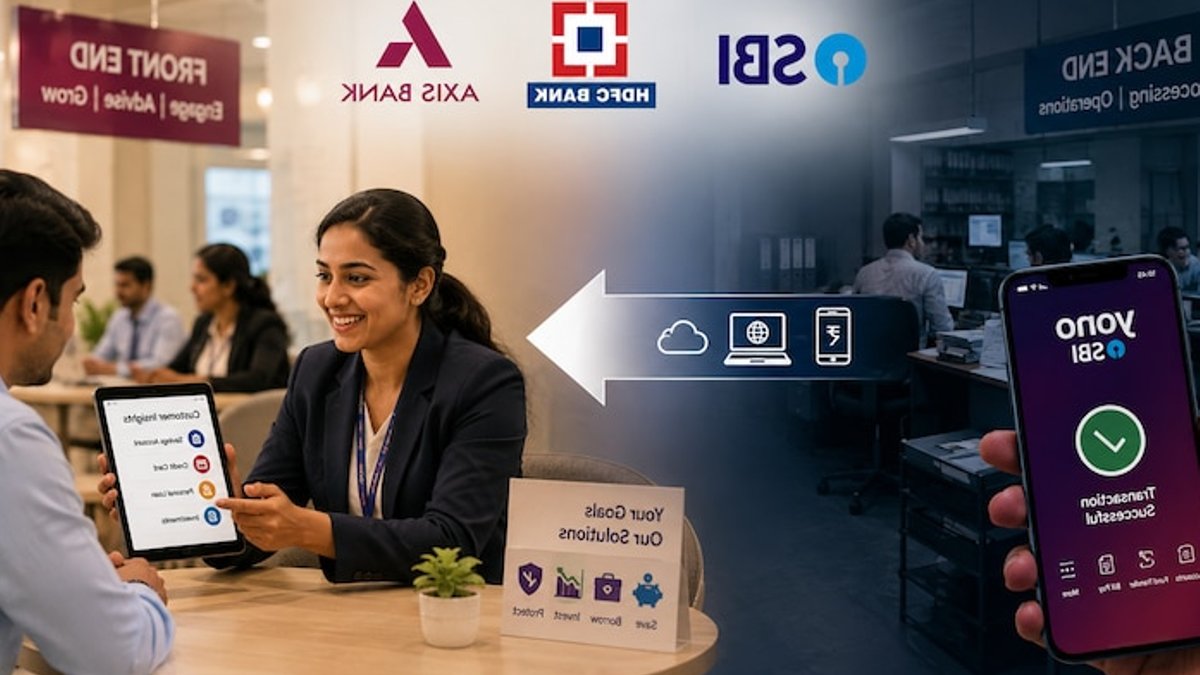
Indian banks are asking employees to go beyond traditional duties, a shift prompted by the migration of routine transactions to digital channels.
SBI redirects staff toward sales and upselling
State Bank of India disclosed on its fourth‑quarter FY26 earnings call that a substantial share of transactions now occurs through alternate channels. Chairman Challa Sreenivasulu Setty said, “We are redeploying some of the workforce into sales and training our workforce in the branches for upselling.”
The institution reported that 66 % of new savings accounts were opened via its Yono platform during the fiscal year, and that the latest version of Yono topped four crore registrations within three months of launch, pushing total users to roughly ten crore. With digital onboarding handling the bulk of account creation, SBI is repurposing branch staff to focus on cross‑selling loans, credit cards, and investment services.
HDFC Bank moves capacity to the front end
HDFC Bank said it is shifting capacity from back‑office functions to customer‑facing roles as technology shortens processing times. Management explained that the move will free up staff to engage directly with clients, aiming to generate “business momentum.”
Related: Kaynes Tech Q1: Brokers Cut Estimates Over Working Capital
Its strategy includes leveraging digital tools to cut turnaround times, allowing employees to spend more time advising customers on financial solutions rather than handling routine paperwork. This realignment is intended to improve service quality while sustaining revenue growth.
Axis Bank equips staff with real‑time insights
Axis Bank introduced its Siddhi platform, which provides more than 90 000 employees with real‑time data and personalized recommendations. The system supports over 30 cross‑sell journeys covering deposits, cards, loans, investments, and remittances.
According to the institution, the initiative has produced an approximate 30 % increase in key performance indicators, including term‑deposit bookings, mutual‑fund transactions, and credit‑card sales. The technology aims to make each customer interaction more productive by highlighting relevant products at the point of contact.
Across the sector, digital adoption is reshaping employee responsibilities. Punjab National Bank noted that over 95 % of its customer transactions now occur digitally, and half of its loan approvals are processed through online channels. As routine banking moves online, the role of branch staff evolves from transaction processing to relationship management and product promotion.
Related: MTV Hustle returns for fifth season
Training programs will need to equip employees with sales and advisory skills.
While the trend appears clear, the impact on workforce composition remains uncertain. If banks continue to automate back‑office tasks, they may need to invest in programs that develop soft‑skill competencies alongside traditional banking knowledge.
In the short term, the changes may strain staff accustomed to conventional duties, requiring adjustments in performance metrics and compensation structures. However, the long‑term outlook suggests that institutions which successfully integrate technology with human interaction could maintain a competitive edge in a market where customers expect both convenience and personalized service.


