


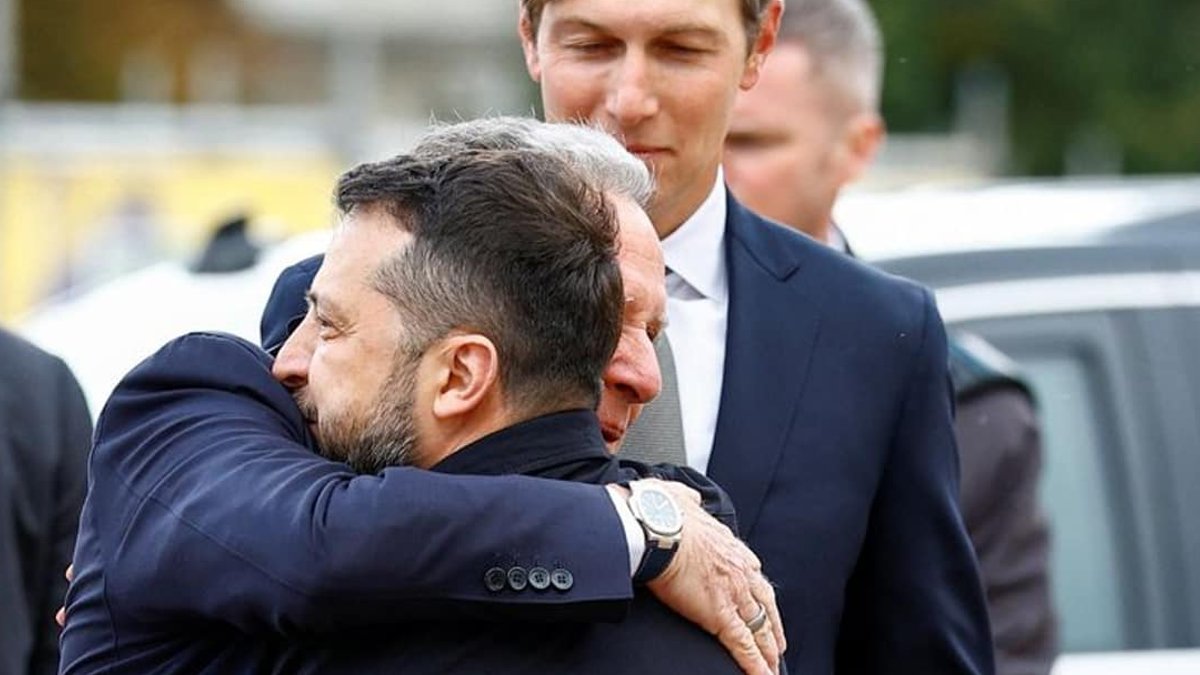
U.S. peace envoys Jared Kushner and Steve Witkoff met with Ukrainian President Volodymyr Zelenskiy in Kyiv on Sunday, marking their first visit to the Ukrainian capital in their capacity as negotiators for the Trump administration. The envoys traveled from Moscow, where they spent three hours talking with Russian President Vladimir Putin on Saturday without securing a visible breakthrough in the conflict that began nearly four and a half years ago. Their visit had been sought by Ukrainian leadership for months, as Kyiv viewed direct negotiations with American envoys in the Ukrainian capital as essential to establishing credibility in any peace process.
Trump Vows Swift End, Unveils New Peace Plan
Trump has repeatedly promised a swift end to the fighting, and on Friday suggested his administration had developed a fresh proposal to present. He did not provide details. Kremlin aide Yuri Ushakov called Saturday’s session with the American delegation “highly useful,” while a White House official told reporters that next steps would be revealed in the coming weeks. The fresh proposal came after previous rounds of U.S.-mediated peace talks encouraged by Trump during his first term had yielded few tangible results, though administration officials maintained that renewed diplomatic engagement represented progress.
U.S. Envoys Describe Substantive Kyiv Talks
After meeting Zelenskiy and other senior Ukrainian officials in central Kyiv, Witkoff described the discussions to reporters as “substantive, important, and we are very encouraged.” The session included a working lunch, a format typically used to allow for more informal exchanges beyond the formal agenda. Zelenskiy said additional talks were scheduled for later Sunday, with European representatives set to join the negotiations. National security advisers from Britain, France, and Germany were also in Kyiv that day, reflecting the broader international coalition supporting Ukraine’s position at the negotiating table.
Zelenskiy: Washington’s Role Key Before Election
Zelenskiy has repeatedly said Washington will be essential to any eventual peace agreement. He has also argued that a window for negotiations exists now, before the United States begins preparing for its next presidential election cycle. The timing reflects concerns in Kyiv that domestic U.S. political considerations could reduce Washington’s appetite for sustained engagement in foreign conflicts once election campaigning intensifies. “Security guarantees are needed. A dignified post-war peace is needed. Our proposals have been drawn up,” Zelenskiy said as his team prepared for the morning session with the American delegation.
Stalemate Over Donbas Clouds Peace Prospects
Past rounds of U.S.-mediated talks have produced little visible progress. The two sides remain sharply divided over the future of the Donbas, the eastern Ukrainian region where fighting has been heaviest. Russia has demanded Ukraine withdraw from a network of towns it still holds there. Kyiv has refused, arguing it can continue to defend the territory. The strategic importance of these positions lies in their proximity to major transport routes and the psychological significance of maintaining control over territory that Russia claims as its own.
For Ukraine, solid security guarantees from both European partners and the United States represent a non-negotiable condition for any deal. Without them, officials in Kyiv argue, there is little to stop Russia from launching another invasion once terms are signed. Such guarantees could take various forms, including the permanent stationing of foreign troops on Ukrainian soil, intelligence-sharing arrangements, or binding treaty obligations with economic penalties for violation. “We need an agreement that will never be broken,” said Svitlana Kurylenko, a 19-year-old café worker in the city. “Just leave Ukraine alone and let people live in peace.”
On the streets of a city that has faced relentless air raids in recent weeks, some residents expressed cautious hope. Beyond the immediate capital, civilians in eastern Ukraine have endured years of proximity to active combat zones, with infrastructure damaged and displacement affecting millions. “The issue can be solved in the blink of an eye. We want peace. I’ve fought myself, so I know what war is like,” said Stepan Yermak, a military veteran. “We need peace, because there’s no other way.”
While ground operations along the 1,200-kilometer front have shown little movement, both sides have ramped up long-range strikes in recent weeks. Russia has hammered Kyiv day and night with missiles and drones for the past two weeks, including a Friday strike on the headquarters of the SBU security service. The Kremlin announced it would pause attacks on the Ukrainian capital until Monday. Ukraine said it would hold fire on Moscow during the same period.
The temporary agreement did not extend to other parts of the country. Russia bombarded several Ukrainian cities on Saturday, and fighting continued along the full length of the front line. Ukraine, for its part, has spent the summer targeting Russian energy infrastructure, hitting refineries and oil terminals deep inside Russian territory. The Ukrainian military said Sunday it had struck the Ryazan oil refinery, roughly 480 kilometers from the border, overnight, causing a fire. The strategy of targeting Russian energy facilities aims to reduce Moscow’s revenue from oil exports while also demonstrating Ukraine’s ability to strike deep within Russian territory.


